
First Time Homebuyer Guide Essential Steps to Buy a Home Today

Buying a first home can feel like trying to hit a moving target. Home prices, mortgage rates, inventory, insurance costs, and competition can shift quickly, and every decision seems to affect the next one.
The good news is that the process becomes much easier when you know the order of the steps. A smart home search starts before the first showing. It begins with understanding the market, building a realistic budget, getting pre-approved, and choosing the right people to guide the purchase.
This guide walks through the essential steps first-time buyers should take, plus the common mistakes that can turn an exciting milestone into an expensive lesson.
This article is for general information only and is not financial, legal, or tax advice. A qualified lender, real estate agent, attorney, or tax professional can help with your specific situation.

Understand the current housing market before you shop
The housing market is not the same everywhere. A city with limited inventory may move fast, while a nearby suburb may give buyers more time to compare homes. Even within one metro area, conditions can change by neighborhood, price range, and property type.
Before touring homes, learn what is happening in the areas where you hope to buy. Pay attention to:
How long homes usually stay on the market
Whether sellers are getting multiple offers
How close sale prices are to asking prices
Whether buyers are asking for repairs or seller credits
How mortgage rates affect your monthly payment
How property taxes and insurance vary by location
A starter home in a competitive school district may sell faster than a larger home farther from job centers. A condo may look more affordable until the homeowners association fee is added. A house with a lower list price may need major repairs.
Market knowledge helps you act with confidence. It also helps you avoid two common traps: overpaying because you feel rushed, or waiting too long in a market where good homes sell quickly.
A good first offer is not just based on the listing price. It is based on recent comparable sales, the home’s condition, local competition, and your full monthly cost.
Build a real budget before you get attached to a home
Skipping budget planning is one of the biggest first-time buyer mistakes. A lender may approve you for a certain amount, but that does not always mean the payment will feel comfortable.
Start with your monthly life, not with a dream listing. Look at your income, debts, savings, and regular costs. Include groceries, transportation, childcare, medical costs, subscriptions, student loans, and emergency savings. A house payment that leaves no cushion can make normal life feel stressful.
Your housing budget should include more than principal and interest. A full monthly payment may include:
Cost | What it covers |
Mortgage principal and interest | The loan repayment and interest charged by the lender |
Property taxes | Local taxes based on the home’s assessed value |
Homeowners insurance | Coverage for damage, liability, and certain losses |
Mortgage insurance | Often required with a smaller down payment |
HOA or condo fees | Shared maintenance, amenities, or community costs |
Utilities | Electricity, gas, water, sewer, trash, and internet |
Maintenance | Repairs, upkeep, landscaping, appliances, and systems |
A simple way to test your budget is to practice the new payment before you buy. If your rent is $1,800 and your expected housing cost is $2,600, move the $800 difference into savings each month. If that feels tight, the home budget may need adjusting.
Do not forget the money needed at closing. Buyers often plan for the down payment but forget lender fees, title charges, escrow deposits, prepaid insurance, appraisal fees, inspection fees, and moving costs. Some costs can vary by state and loan type, so ask for written estimates early.
Get pre-approved before making serious offers
A mortgage pre-approval is one of the most important early steps. It tells you how much a lender may be willing to lend based on a review of your financial profile. It also shows sellers that you are a serious buyer.
Pre-approval is stronger than pre-qualification. Pre-qualification is often a quick estimate based on information you provide. Pre-approval usually involves documentation such as pay stubs, W-2s, bank statements, tax returns, and a credit check.
A lender will look at:
Credit score and credit history
Income and employment
Debt-to-income ratio
Savings and cash reserves
Down payment amount
Loan type and property type
Getting pre-approved early gives you time to fix issues. Maybe your credit report has an error. Maybe your debt-to-income ratio is too high. Maybe a different loan program fits better. Finding out before you write an offer is better than scrambling after you fall in love with a home.
Pre-approval also helps set guardrails. If the lender approves a larger amount than expected, stay anchored to your personal budget. If the approval comes in lower than expected, adjust your search before wasting time on homes that do not fit.

Choose the right real estate agent for your first purchase
The right agent does more than unlock doors. A strong buyer’s agent helps you understand pricing, compare neighborhoods, write competitive offers, negotiate terms, and manage deadlines.
First-time buyers should look for an agent who explains the process clearly and does not pressure quick decisions. Experience matters, but so does communication style. You need someone who answers questions, knows your target area, and can point out concerns during showings.
Ask potential agents questions before committing:
How often do you work with first-time buyers?
Which neighborhoods or property types do you know best?
How do you help buyers decide what to offer?
What happens if a home has multiple offers?
How do you communicate during the search?
Can you explain the buyer agency agreement and any fees?
A helpful agent will also tell you when not to buy a house. That might mean warning you about a poor location, a risky inspection report, or a price that does not match recent sales.
Trust is key. If an agent dismisses your budget, rushes you past concerns, or avoids direct answers, keep looking.
Shop for homes with both your heart and your checklist
It is natural to react emotionally when you walk into a home. Light, layout, finishes, and curb appeal matter. Still, a home that looks perfect in photos may not be the right fit long term.
Before touring, divide your wants into three groups.
Must have | Nice to have | Deal breaker |
Enough bedrooms, safe structure, workable commute | Updated kitchen, fenced yard, extra storage | Flood risk you cannot accept, major repairs beyond budget, poor location fit |
This makes decisions easier when tradeoffs appear. A home may have an older kitchen but a strong location and solid structure. Another may have beautiful finishes but sit on a noisy road or require a difficult commute.
Visit neighborhoods at different times if possible. A street that feels quiet on a weekday morning may feel different on a Saturday night. Check the drive to work, grocery stores, parks, schools, transit access, and future development plans when available.
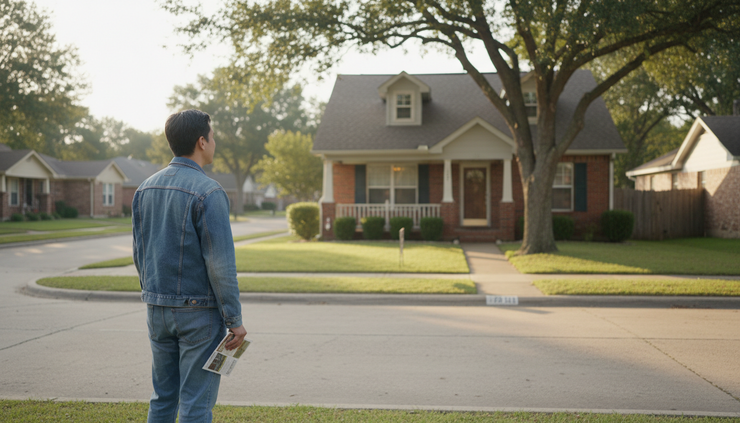
Location deserves special attention because it is the one thing you cannot renovate. You can change paint, flooring, fixtures, and landscaping. You cannot move the house away from highway noise, poor drainage, or a commute that drains your energy.
Ignoring the importance of location can lead to buyer’s remorse even when the house itself is attractive.
Make an offer that matches the home and the market
Once you find a home that fits your needs, your agent will help prepare the offer. Price matters, but it is only one part of the package.
An offer may include:
Purchase price
Earnest money deposit
Loan type
Down payment amount
Inspection contingency
Appraisal contingency
Financing contingency
Closing date
Seller credits or repair requests
Personal property included in the sale
In a slower market, buyers may have room to negotiate price, repairs, or closing costs. In a competitive market, buyers may need a stronger price, flexible closing terms, or a larger earnest money deposit.
Be careful with waived contingencies. Removing an inspection or appraisal protection can make an offer more attractive, but it can also increase your risk. First-time buyers should understand every term before signing.
A strong offer is not always the highest offer. Sellers may value certainty, timing, and clean terms. Your agent can help you decide what makes sense without stretching beyond your comfort zone.
Take the inspection seriously
A home inspection is one of the best tools a buyer has. It helps reveal the condition of the property before closing. No home is perfect, including new construction, but the inspection gives you a clearer picture of what you are buying.
A general home inspector usually checks major systems and visible components, such as:
Roof and gutters
Foundation and structure
Electrical system
Plumbing
Heating and cooling systems
Attic and insulation
Windows and doors
Appliances
Drainage and grading
Safety concerns
Depending on the home and location, you may also need specialized inspections. These can include sewer scope, termite or pest inspection, radon testing, mold evaluation, chimney inspection, well and septic inspection, or structural engineering review.
Attend the inspection if you can. Ask questions. Learn where the main water shutoff is. Find out which issues are urgent and which are normal maintenance.
After the inspection, your agent may help you request repairs, ask for a seller credit, renegotiate, or walk away if the contract allows. Focus on major safety, structural, or system issues. Cosmetic flaws are usually less important than a failing roof or unsafe wiring.
Conducting thorough property inspections can protect you from surprise expenses and help you plan for future maintenance.
Watch for hidden costs after your offer is accepted
Getting under contract is exciting, but the spending is not over. Hidden costs can surprise buyers who only planned for the down payment.
Common costs during and after the purchase may include:
Home inspection and specialty inspections
Appraisal fee
Lender fees
Title insurance and settlement charges
Homeowners insurance premium
Property tax escrow
HOA transfer or move-in fees
Utility deposits
Moving expenses
Immediate repairs
New locks
Window coverings
Lawn equipment
Appliances not included with the sale
Set aside a post-closing reserve if possible. Even a well-maintained home can need small repairs right away. A water heater may be older than expected. A dishwasher may fail. A fence may need repair after the first storm.
Buying with every dollar spent at closing can make the first year harder than it needs to be. A cushion gives you room to handle normal surprises without turning to high-interest debt.
Avoid the most common first-time homebuyer mistakes
Many costly mistakes happen because buyers move too fast or focus on the wrong number. Keep these risks in view from the start.
Skipping budget planning
Do not base your search only on the maximum loan amount. Build a budget around the monthly payment you can live with, including taxes, insurance, maintenance, and savings.
Overlooking hidden costs
The purchase price is not the full cost of ownership. Closing costs, repairs, utilities, HOA fees, and moving expenses can add up quickly.
Ignoring the importance of location
A beautiful home in the wrong location can become a daily frustration. Study commute times, noise, nearby services, school options if relevant, and long-term resale appeal.
Making big financial changes before closing
Avoid opening new credit cards, financing furniture, changing jobs, or moving large sums of money without talking to your lender. Lenders often verify finances again before closing.
Falling in love too quickly
A home can feel perfect during a showing and less perfect after the inspection, appraisal, or full cost review. Stay excited, but keep your checklist close.
Choosing the wrong agent or lender
Poor communication can cost time, money, and confidence. Work with people who explain options clearly and respond when deadlines matter.

Prepare for closing and the first month of ownership
The final stretch includes paperwork, final loan approval, title review, insurance setup, and a final walk-through. Read documents carefully and ask questions before signing. Confirm that agreed repairs are complete and that the home is in the expected condition.
Before moving day, handle a few practical tasks:
Schedule utilities to start before closing or move-in
Buy homeowners insurance by the lender’s deadline
Keep cash available for closing
Avoid new debt until the home purchase is complete
Book movers or reserve a truck early
Change locks after closing
Save inspection reports and appliance manuals
Create a simple maintenance calendar
The first month in a new home can be busy. Start with safety and function. Replace smoke detector batteries if needed, test carbon monoxide detectors, locate shutoff valves, clean dryer vents, and learn how the electrical panel is labeled.
Cosmetic projects can wait. A steady plan will serve you better than trying to fix everything at once.
A smart first home purchase is built step by step
The best homebuying experience is not always the one with the lowest price or the prettiest kitchen. It is the one that fits your budget, supports your daily life, and leaves room for the costs of ownership.
Start by understanding your market. Get pre-approved. Choose an agent who teaches as much as they sells. Tour homes with a clear checklist. Make offers based on facts, not fear. Take inspections seriously. Plan for hidden costs before they appear.
A first home is a big decision, but it does not have to be a rushed one. With the right preparation, you can move from uncertain shopper to confident homeowner, one clear step at a time.


Comments